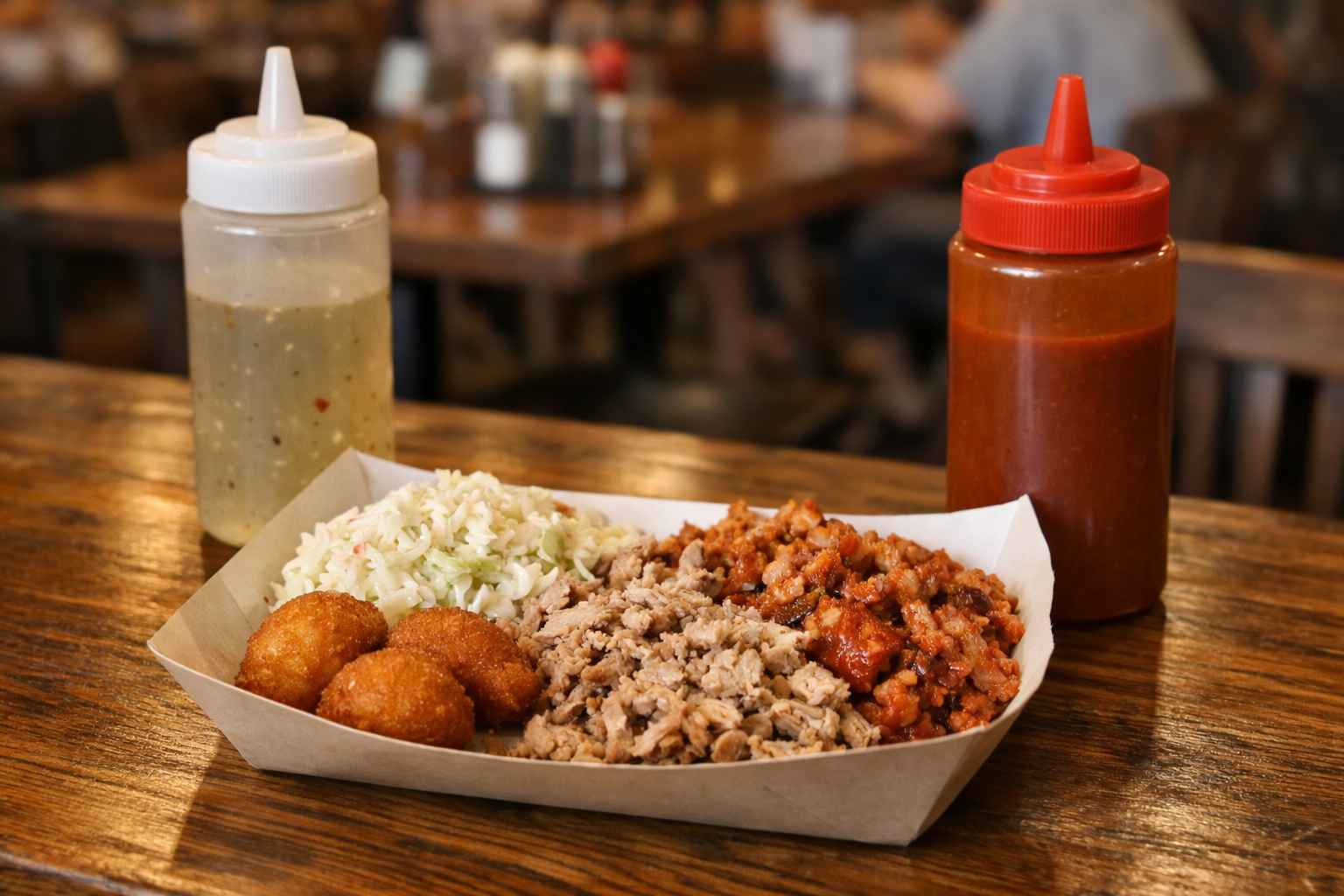
If you’ve Googled what is North Carolina known for and landed on barbecue (as most people do), you’ll quickly run into a second question: Eastern vs. Lexington barbecue — what’s actually different?
The honest answer is that the differences can sound small on paper, and then feel pretty obvious once you’re holding a plate. Sauce. Cut of meat. Texture. Even the “default” sides. And yes, the opinions can get a little intense. I think that’s partly because barbecue here isn’t just food — it’s memory, identity, and family routine, all served in a paper tray.
This guide breaks down Eastern vs. Lexington barbecue in North Carolina in a calm, practical way: what each style usually means, where you’ll typically find it, and how to order without feeling like you need to pass a test. For the bigger statewide picture (regions, history, brands, and travel planning), you can start with the guide on what is North Carolina known for.
Eastern vs. Lexington barbecue in North Carolina: the quick summary
If you only remember a few things, remember these:
- Eastern style is typically whole hog, chopped, with a thin vinegar-and-pepper sauce.
- Lexington style is typically pork shoulder, chopped or sliced, with a vinegar base that usually includes some tomato.
- Both are “real” North Carolina barbecue; they’re just different traditions that grew up in different places.
That’s the clean version. Real life is messier. Some restaurants blend approaches. Some lean more peppery, some a little sweeter. Some cooks keep it ultra-simple; others add their own touches. Still, the core distinctions tend to hold up.
What Eastern-style barbecue usually means
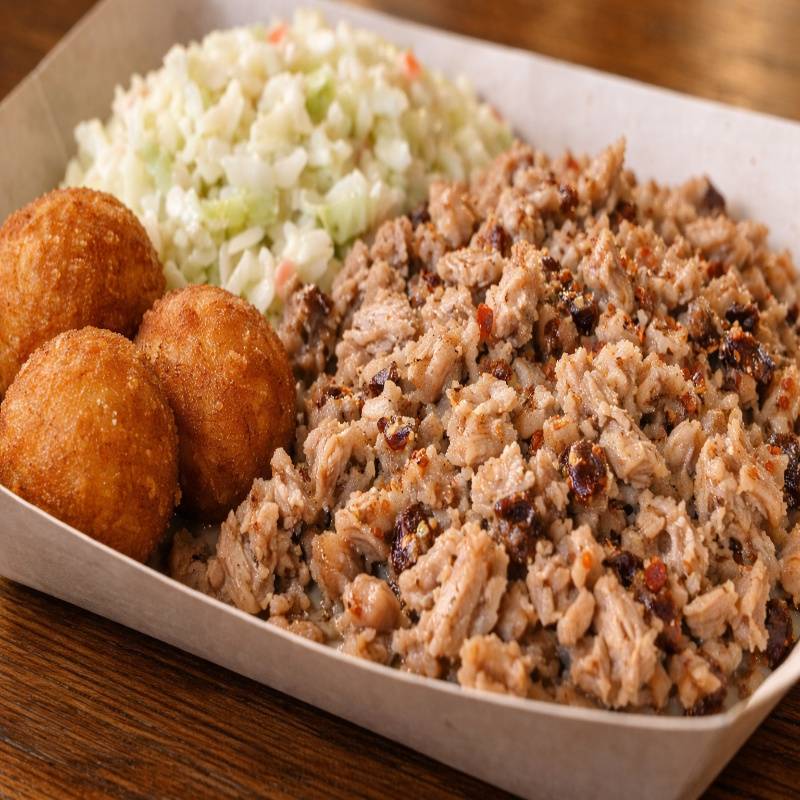
In much of eastern North Carolina, barbecue often means whole hog cooked low and slow, then chopped so you get a mix of textures: tender meat, a little bark, and sometimes small bits that carry a deeper, smokier flavor. It’s not usually “shredded” in the pulled-pork sense. It’s chopped, and that matters for the mouthfeel.
The sauce is typically thin and vinegar-forward, seasoned with salt and chili pepper (often red pepper flakes). It’s sharp, bright, and it cuts through rich pork in a way that makes the whole plate feel lighter than you expect. If you’ve had thicker, sweeter barbecue sauces elsewhere, this can be a surprise — sometimes a welcome one, sometimes a “wait, that’s it?” moment. Both reactions happen.
Where you’ll find Eastern barbecue
Eastern-style barbecue is most associated with eastern and coastal parts of the state. That said, because people move around (and because good ideas travel), you can find Eastern-style plates well outside the east. Still, if you’re road-tripping toward the coast or the Outer Banks, the odds go up that “barbecue” on a menu means this style by default.
How to order Eastern-style barbecue (without overthinking)
If you’re new to it, a “barbecue plate” is a safe starting point. The house will typically serve chopped pork with slaw and hush puppies. If the menu gives you slaw options, and you’re curious, try the vinegar-based slaw at least once — it tends to match the sauce nicely.
One small note: some places will offer “outside brown” or a similar phrase, meaning a preference for more bark and darker pieces. If you like deeper smoke flavor and texture, you might enjoy that. If you want it milder and softer, stick with the standard.
What Lexington-style barbecue usually means
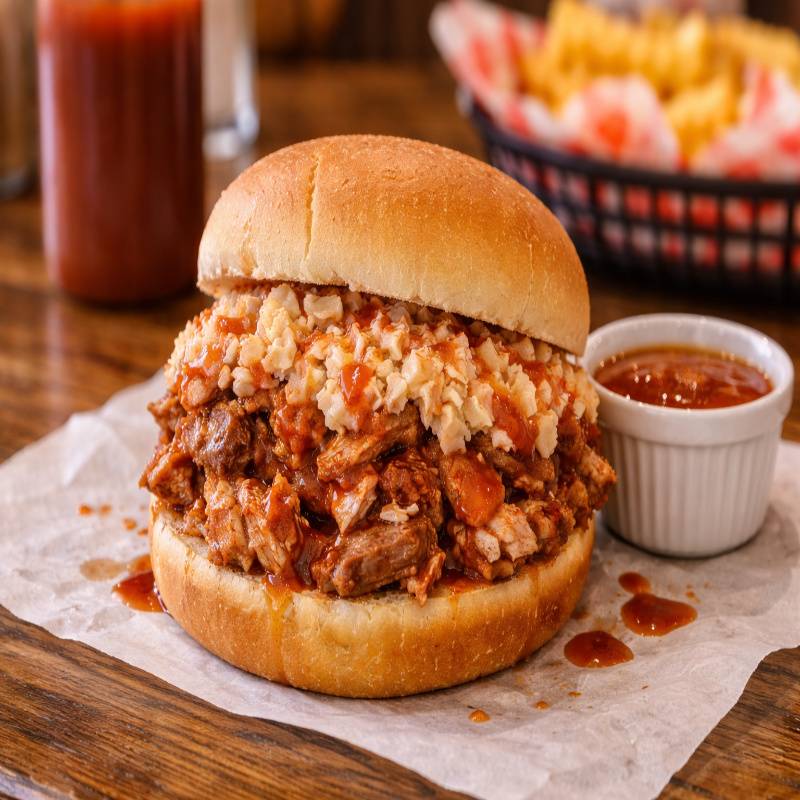
Lexington-style barbecue is most associated with the Piedmont, and especially around Lexington itself. The meat is typically pork shoulder, cooked until tender and then chopped (sometimes sliced). Compared to whole hog, pork shoulder tends to feel a little more uniform in texture and richness. It’s still smoky and satisfying, but in a steadier way.
The sauce is still vinegar-based, but it commonly includes tomato, giving it a slightly redder color and a rounder flavor. I hesitate to call it “sweet,” because it’s not sweet the way some national barbecue sauces are sweet — but compared with Eastern sauce, it can feel softer and a bit fuller.
Where you’ll find Lexington barbecue
Lexington-style barbecue is strongly tied to the Piedmont. If you’re spending time in central North Carolina — especially around Winston-Salem, Greensboro, High Point, and Lexington — you’re in the right general zone for this tradition. Even when restaurants elsewhere adopt it, they often name it explicitly because “Lexington-style” carries real meaning to people.
How to order Lexington-style barbecue
A classic move is a barbecue sandwich with slaw. In many Lexington-style spots, slaw is not just a side; it’s part of the sandwich identity. It adds crunch and a bit of acidity, and it helps the sandwich feel balanced instead of heavy.
If you’re hungry (or traveling with someone who is), order a plate and split it. It’s a nice way to sample sides and see the “default” setup of the restaurant, which is often where the personality shows up.
Let’s talk sides: hush puppies, slaw, and the quiet details
Barbecue debates tend to revolve around meat and sauce, but sides are where you notice the local rhythm. Hush puppies are common across the state, usually golden, fried, and served hot. Slaw can be vinegar-based or creamy, and which one the restaurant considers “normal” tells you a lot about the tradition it’s leaning into.
Baked beans, potato salad, collards, mac and cheese, and simple vegetables show up, too. None of these sides are particularly unique to North Carolina in isolation, but the combinations — and the way they’re served without fanfare — feel very “here.”
Eastern vs. Lexington barbecue: what matters most (taste-wise)
If you’re trying to predict what you’ll like, it helps to think in flavor profiles rather than rules.
- Choose Eastern if you like sharper acidity, lighter sauce, more varied texture, and the “whole hog” chopped style.
- Choose Lexington if you like a slightly rounder sauce, a more consistent pork texture, and sandwiches where slaw feels like part of the main event.
And if you can, try both. Not because you “should,” but because it’s genuinely interesting. The first time you taste them back-to-back, you stop thinking of it as a trivia question and start understanding why the distinction matters to locals.
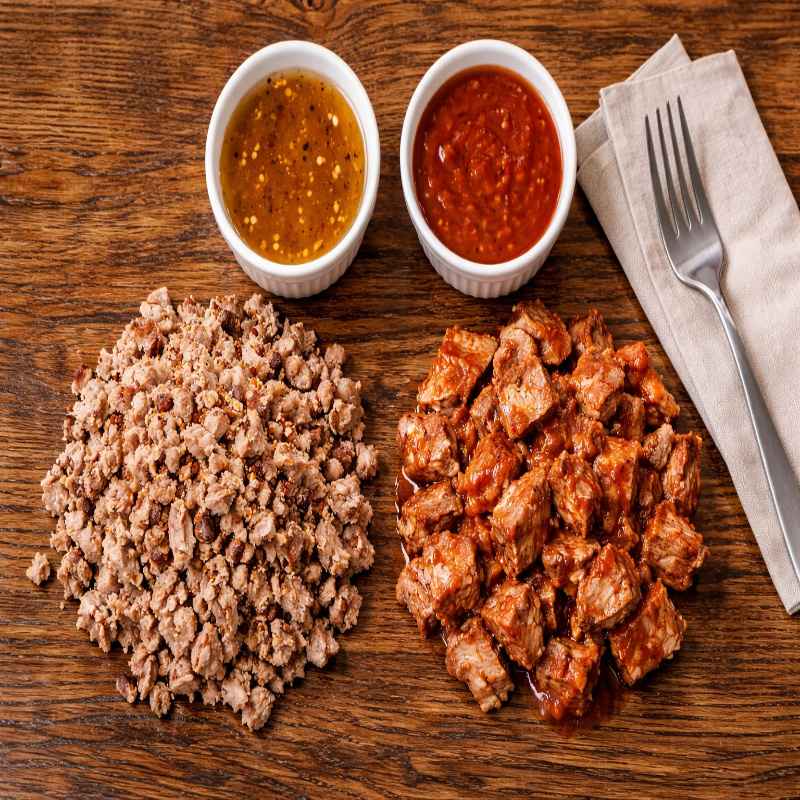
How to do a two-style tasting day
This is a simple way to make the comparison without turning your trip into a marathon:
- Eat Lexington-style earlier in the day (a sandwich is usually enough).
- Later, eat an Eastern-style plate (or split a plate if you’re with someone).
- Keep the sides similar if possible, so you’re not comparing a plate with beans and mac to a plate with slaw and fries and calling it “science.”
- Notice what you actually like: the sauce, the smoke level, the texture, or the way the meal feels after you finish it.
There’s no prize for picking the “right” one. The point is to experience something that’s genuinely regional, and honestly, it’s a nice excuse to slow down and take the day a little less seriously.
Common mistakes (and how to avoid them)
People sometimes miss out on good barbecue experiences for reasons that are easy to fix.
- Expecting thick, sticky sauce: Many North Carolina sauces are thin by design; give it a fair try before deciding it’s “not enough.”
- Not asking what the house does: If the menu is vague, ask what style they serve; it’s a normal question, and you’ll usually get a helpful answer.
- Arriving too late: Some of the best barbecue spots sell out. If you’re set on a particular place, earlier is safer.
- Over-ordering: Barbecue plates can be filling, especially with sides; consider splitting if you’re sampling multiple places.
Pair it with the rest of what North Carolina is known for
Barbecue makes more sense when it’s part of a bigger day — a scenic drive, a museum stop, a college town stroll, or even a beach afternoon. If you’re planning your trip around food (no judgment; I do this too), you’ll probably enjoy the broader guide to North Carolina foods and what the state is known for on a plate, because it helps you connect barbecue to coastal seafood, sweet potato traditions, and the everyday brands people actually grow up with.
And if you want to round out your tasting with the state’s best-known drinks and snacks, there’s a companion guide to iconic North Carolina food brands — which is a nice way to add something fun (Cheerwine, Krispy Kreme) to a barbecue-heavy itinerary.
FAQ: Eastern vs. Lexington barbecue in North Carolina
Is Eastern barbecue always whole hog?
Traditionally, Eastern-style barbecue is closely associated with whole hog. In practice, some restaurants may use different cuts while keeping the vinegar-and-pepper flavor profile. If you care about the cut, it’s worth asking what they cook.
Is Lexington barbecue the same as “Piedmont-style”?
Lexington-style barbecue is strongly tied to the Piedmont and is sometimes used interchangeably with “Piedmont-style.” Still, you’ll occasionally see restaurants use “Piedmont-style” more broadly, so if you’re curious, ask what sauce base they use and whether the meat is shoulder.
Which style is better?
It depends on what you like. Eastern tends to be sharper and more vinegar-forward, with whole-hog texture. Lexington tends to be a bit rounder with tomato in the sauce and pork shoulder as the base. If you try both, you’ll probably form an opinion faster than you expect.
How does this connect to what is North Carolina known for?
Barbecue is one of the clearest, most lived-in answers to what is North Carolina known for, because it changes by region, sparks loyalty, and shows up in everyday life — not just on special occasions.
If you’re building a full itinerary beyond barbecue — mountains, coast, scenic drives, and the practical realities of visiting — the pillar guide to what is North Carolina known for ties everything together in one place.