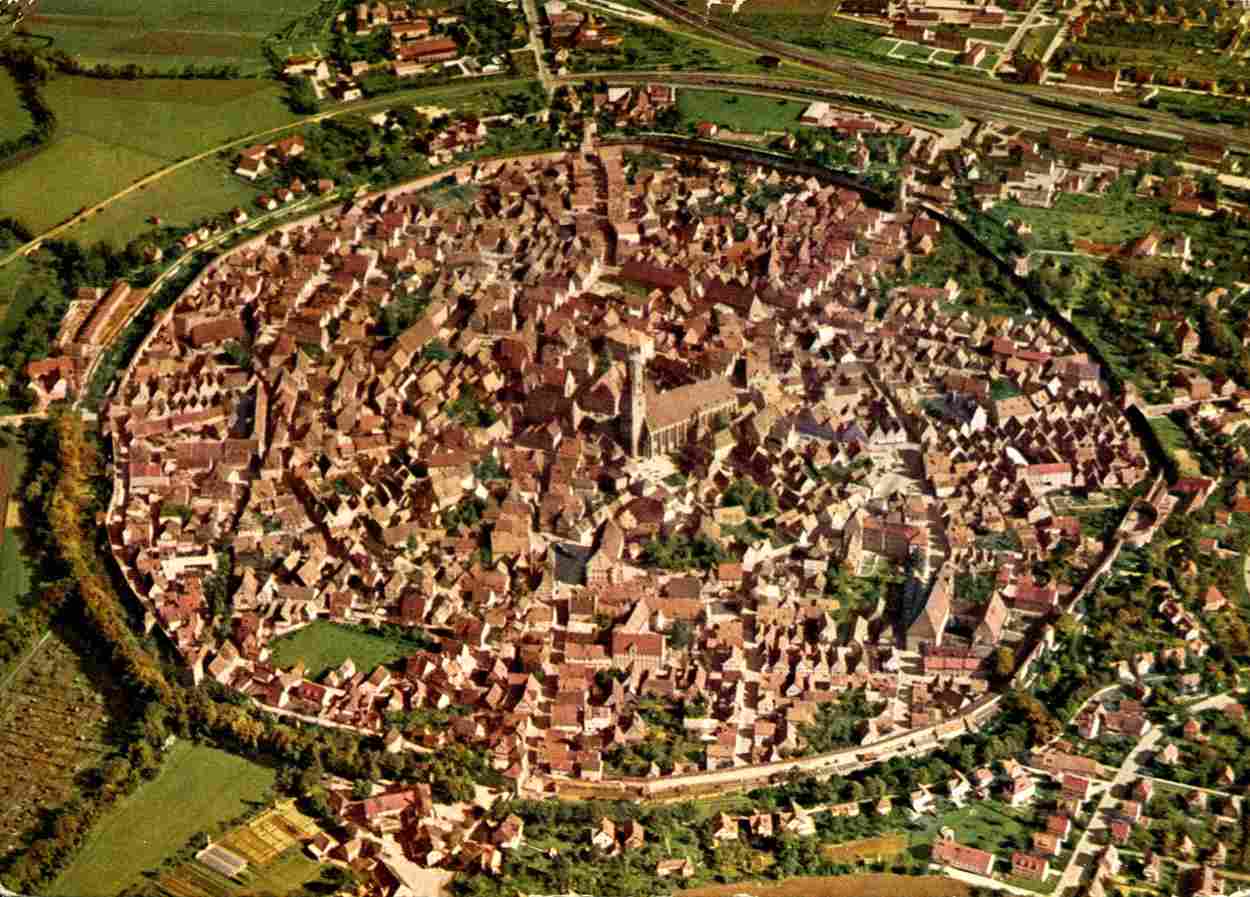
If you’ve ever had that slightly specific travel craving — “I want a place that looks medieval, feels real, and won’t take three days to figure out” — nordlingen fits unusually well. It’s compact, it’s walkable, and it has a rare “you can see the whole story at once” quality: a round old town wrapped in a fully preserved wall, sitting inside the Nördlinger Ries impact crater. I think it’s one of those stops that quietly resets your standards for day trips.
This guide is written for travellers (including families) who want a plan they can actually follow: where to start, what to do first, what’s worth paying for, and what you can skip without regret. I’ll give you a couple of itineraries, some honest pacing tips, and a few small details that make the day smoother — because, in practice, that’s what turns “pretty town” into a great day out.
Why nordlingen is worth the detour
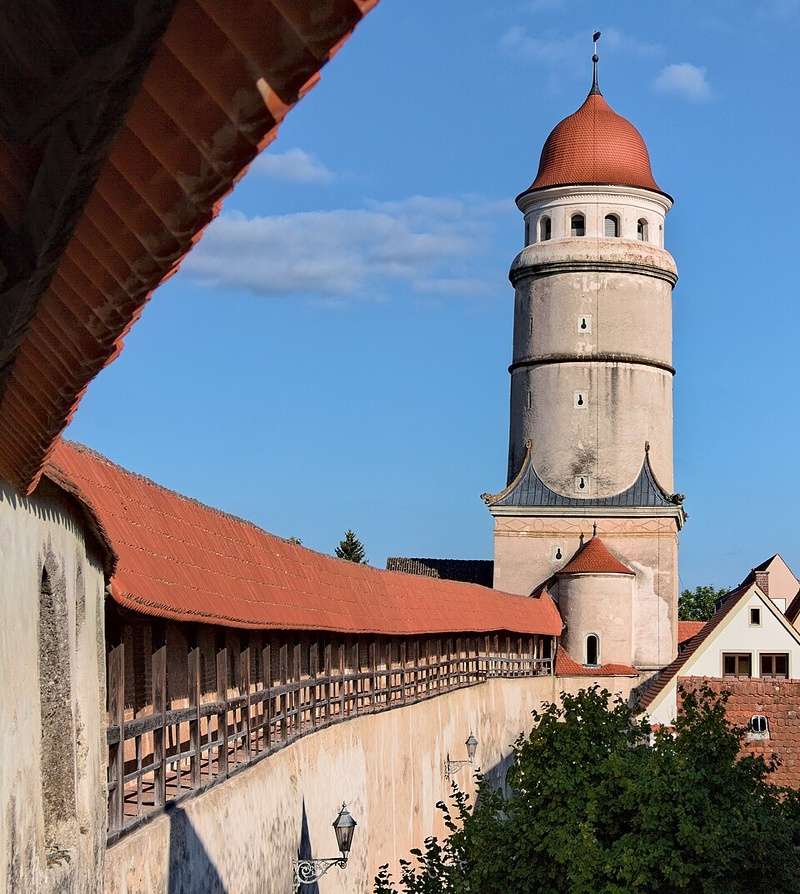
The simplest reason: the city wall is not a fragment or a “mostly preserved section.” It still fully encircles the old town and you can walk along it — about 2.7 kilometres — with gates, towers, and bastions still in place. It’s a rare feeling to be up on a defensive walkway and realise you can keep going… and going… and you’ll actually end up back where you started.
The second reason is the crater story. The Nördlinger Ries formed around 15 million years ago from a meteorite impact, and nordlingen sits inside it. If you’re not normally a “geology person,” don’t worry — you don’t have to be. What matters is that the landscape makes more sense once you know, and the view from the tower clicks into place in a way that’s oddly satisfying.
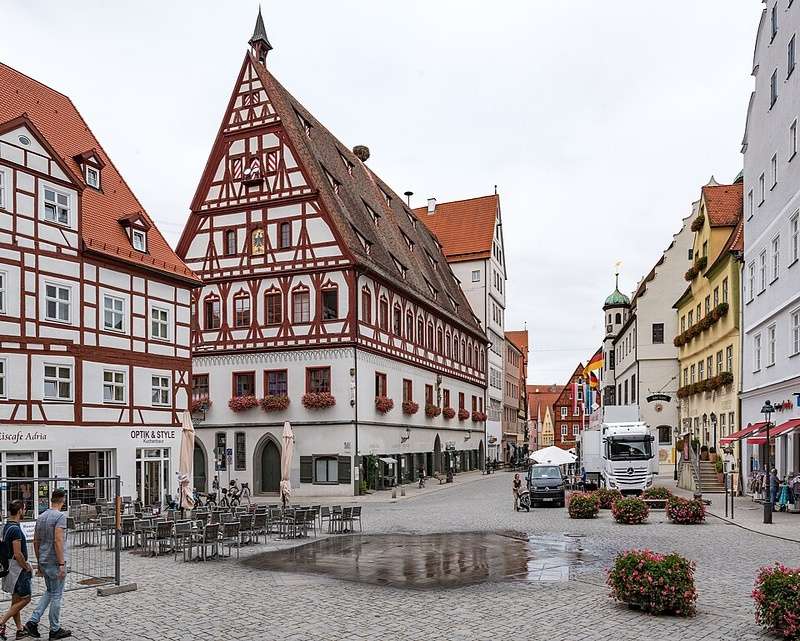
And then there’s the mood. The old town is small enough to feel intimate, but not so small that you run out of things to do after 45 minutes. It’s tidy, yes, but it doesn’t feel like a museum set. It feels lived-in, which (for me, at least) is usually the difference between “nice photos” and “I’d come back.”
How to plan a visit to nordlingen
Most people visit nordlingen as a day trip — often from Munich — and that’s a sensible way to do it. Munich’s official tourism guide frames it exactly that way, and it also notes the practical bit that matters when you arrive: the railway station is roughly a 15-minute walk from the old town.
How much time do you need in nordlingen?
I’d plan based on the experience you actually want, not the theoretical list of sights.
- 2–3 hours: Walk a solid section of the wall, see the market square area, and do either the Daniel tower climb or the Ries Crater Museum (one, not both).
- Half day (4–5 hours): Wall walk loop at an easy pace, Daniel tower, plus the crater museum.
- Full day: Everything above, plus time to linger (and possibly add a side trip like Harburg Castle if you’re driving).
One small caution: it’s easy to underestimate how long you’ll spend just… looking. The wall gives you a constant “pause and stare” rhythm. If you’re travelling with kids, that can go either way — sometimes it’s perfect, sometimes it becomes “are we done yet?” a bit sooner than you hoped. You’ll know your crew.
Best time of day (and one honest note)
If you want the Daniel tower view, do it earlier rather than later. The climb is 365 steep steps, and you’ll enjoy it more when you’re not already tired from a long wall walk.
That said, I’ll admit something slightly contradictory: sometimes I like saving the tower for later because it feels like a “finale.” The only problem is that tired legs don’t negotiate. So, yes, earlier is smarter. Later can be nicer. Pick your trade-off.
Getting there: day trip from Munich
For most travellers, the simplest approach is the train + walking. If you’re planning that route in detail, I’d map it out using a dedicated guide — here’s the companion post I’d use: nordlingen day trip from Munich.
If you’re driving, nordlingen is also an easy “add-on” town if you’re following the Romantic Road. The major practical upside of driving is flexibility: you can combine the town with nearby stops without watching the clock quite so closely.
A simple nordlingen walking route (with timing)
This is the route I recommend if you want the “complete” feeling: wall + old town + tower + crater museum, without backtracking too much. It’s not the only way to do it, but it’s a calm, logical loop.
- Start at the station (or your parking spot) and walk toward the old town gates (about 15 minutes from the station).
- Get up on the city wall early and walk one substantial segment to orient yourself.
- Head into the centre for the market square area and St George’s Church.
- Climb Daniel tower if it’s on your must-do list.
- Visit the Ries Crater Museum for the crater context (this is where the science becomes travel-relevant).
- Finish the wall loop (or at least the most scenic remaining section) and exit near wherever you need to be next.
If you want a more detailed, wall-focused version with entry points, best viewpoints, and photography notes, you’ll probably prefer this companion guide: Nördlingen city wall walk. It’s the same day, just zoomed-in on the part people tend to underestimate.
Walking the city wall: what to look for
The wall is approximately 2.7 kilometres long and remains fully accessible. According to Munich’s official guide, it has five city gates, twelve towers, and two bastions — which sounds like trivia until you’re up there and you realise how much of the town’s shape and history is still legible.
One detail I’d encourage you not to rush past: the little houses tucked against the battlements, sometimes referred to as “Kasarme.” Bavaria’s tourism site explains these were dwellings for poorer residents in the Middle Ages and could be vacated if soldiers needed to be stationed there. It’s a small human detail on a structure that can otherwise feel purely “defensive.”
Practical pacing tip: if you plan to walk the entire loop, give yourself permission to stop often. The best moments tend to be the in-between ones — a view through a tower opening, a quiet stretch where you can look out over roofs, that brief sense of being “above” the town without being removed from it.
nordlingen wall walk: a quick decision guide
If you’re deciding how much wall time to commit to, here’s a simple way to think about it:
- If you want the signature experience, do at least one long, uninterrupted segment (enough to feel the circle).
- If you love historic towns, do the full loop — it’s the closest thing nordlingen has to a “main attraction.”
- If you’re short on time, do the tower + a short wall section rather than trying to “see everything.”
Daniel tower: the climb, the view, the reality
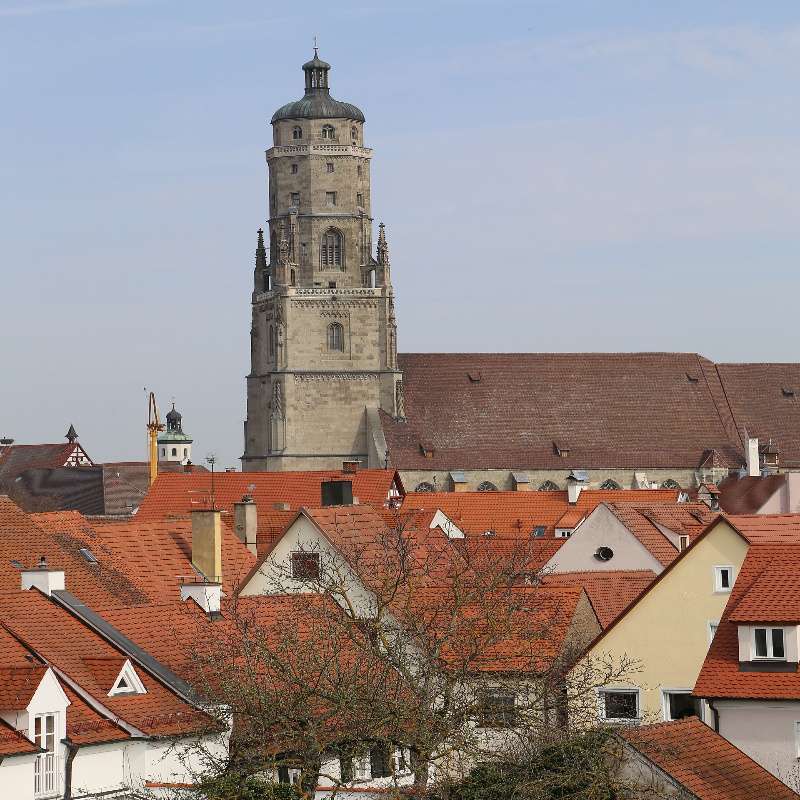
The Daniel tower (the church tower of St George’s Church) is about 90 metres high and is the landmark most people associate with nordlingen. Munich’s guide says it was completed in 1538, and that 365 steep steps lead to the top — which is both precise and, once you’re halfway up, slightly intimidating.
From the top, the view is the payoff: red roofs inside a near-perfect circle, and the wider Ries landscape beyond. It’s the kind of perspective that makes the town’s “crater setting” feel more than just a fact you read online.
One more small cultural note I genuinely like: the watchman’s call is still performed late at night (“So Gsell so!”) according to Munich’s tourism site. You may not be in town at that hour — most day-trippers aren’t — but it’s a nice reminder that not everything here is staged for visitors.
The crater story (in plain language)
The Nördlinger Ries is widely described as an impact crater formed around 15 million years ago. You don’t need to memorise the science, but it helps to carry one simple idea with you: the town sits inside a landscape shaped by a single, violent event, and the surrounding ring of higher ground is part of that story.
If you want the deeper explanation — the kind that’s still readable even if you’re travelling with someone who says “I’m not doing a geology lecture on holiday” — I’d put it in a separate article and link it from here. That’s what this is for: Nördlinger Ries crater explained for travellers.
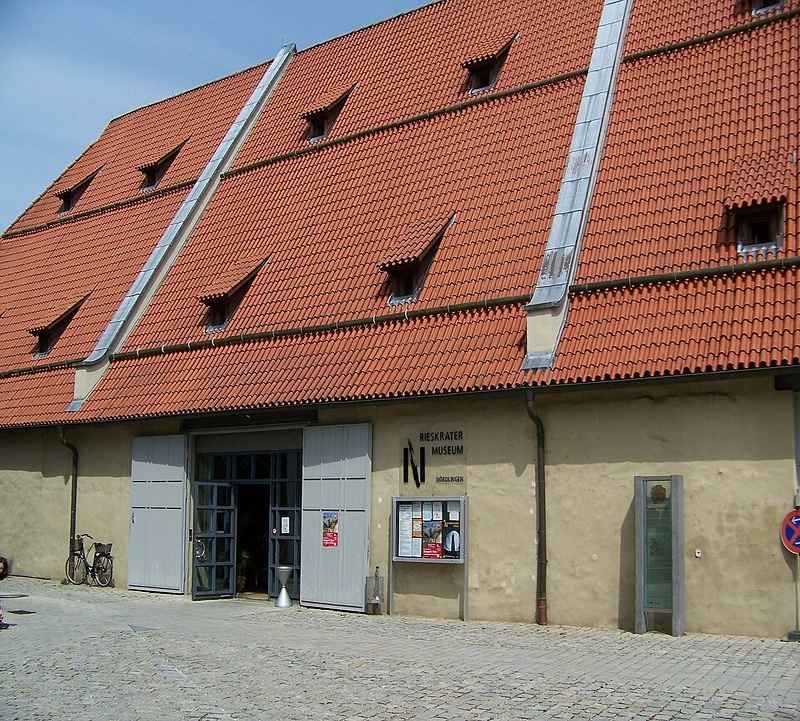
Ries Crater Museum: the best way to ‘get’ nordlingen
The RiesKraterMuseum is one of the most popular sights around nordlingen, and it’s dedicated to the meteorite impact that formed the Nördlinger Ries around 15 million years ago. Munich’s official guide also notes a detail that makes the visit feel even more “of place”: the museum is housed in a medieval barn dating back to 1503.
I like recommending the museum because it changes how you see the town without demanding too much time. You can enjoy nordlingen perfectly well without it — but if you’re the kind of traveller who likes a “why does this place exist like this?” moment, it’s the most efficient way to get one.
If you have extra time: Harburg Castle
If you’re travelling by car and you want to stretch nordlingen into a fuller day, Harburg Castle is a strong add-on. Bavaria’s tourism site states it can be visited from March to November, 10 am to 5 pm, which is helpful — and also a gentle hint to double-check seasonal hours before you commit.
I wouldn’t force this pairing if you’re already feeling “town fatigue.” But if you’re doing the Romantic Road style of trip, it’s the kind of extra stop that can make the day feel more varied: walls and rooftops in the morning, a fortress silhouette later on.
Seasonal notes and festivals
In a lot of small European towns, the “best time to visit” is really just a question of what kind of day you want: quiet and crisp, or lively and eventful. Bavaria’s tourism site highlights two events that can change the feel of the town significantly — the Nördlinger Mess and the Historic Town Wall Festival.
If your dates happen to line up, I’d lean into it. If they don’t, I wouldn’t worry. nordlingen is still nordlingen on a normal weekday, and in some ways that’s when its atmosphere feels most convincing.
Practical tips that make the day easier
- Start with either the wall or the tower. If you try to “save both” for later, you may end up doing one in a hurry.
- Plan one indoor stop. The museum is the obvious choice, and it’s useful if the weather turns.
- If travelling with kids, build in a purpose. The wall becomes more fun when it’s “let’s find the next tower,” not “let’s walk 2.7 km.”
- Keep your expectations human. You don’t need to see every museum to feel like you’ve done nordlingen properly.
Common questions (the ones people actually ask)
Is nordlingen a good day trip?
Yes — and it’s good in a practical way, not just a “pretty photos” way. The town is compact, the highlights are close together, and the wall walk gives you a clear start-to-finish experience without complex logistics.
Can you walk the full wall?
Yes, the wall forms a complete loop around the old town and is described as completely accessible, with an approximate length of 2.7 kilometres. If you’d like the detailed version with suggested entry points and pacing, use the dedicated Nördlingen city wall walk guide.
Is the Daniel tower climb difficult?
It depends on your comfort with steep stairs and enclosed stairwells. The climb is 365 steep steps, so it’s not “casual,” but it’s manageable for many travellers if you take it steadily and rest when you need to.
What’s the one thing I shouldn’t skip?
If you only do one big “signature” experience, I’d pick either the full wall loop or the Daniel tower. If you have time for two, do both — and add the crater museum if you want the place to make deeper sense.
Conclusion: planning your day in nordlingen
nordlingen is one of those places that delivers exactly what it promises: a walled medieval town you can actually walk around, a tower view that makes the town’s shape feel almost unreal, and a crater story that’s genuinely distinctive once you see it in context. If you’re building a Germany itinerary and you want one stop that’s easy, different, and quietly memorable, this is a very safe bet.
If you’re planning the details next, I’d go in this order: start with the nordlingen day trip from Munich logistics (so your timings are realistic), then decide how “wall-focused” you want to be using the Nördlingen city wall walk guide, and finally dip into the Nördlinger Ries crater explained for travellers post if you want the story behind the scenery.